Showing posts with label Seaglass Jewelry. Show all posts

Tuesday, January 29, 2019

Tuesday, January 22, 2019

Fashion Trends We're Watching In 2019


FlaxandSymbol
The 2018 obsession with all things celestial was all-encompassing, and while the universe still captures our collective imagination, next year we’re excited to bring a little more of our attention back down to Earth, embracing the bounty of inspiration right here on our home planet. “We’re officially declaring 2019 the year of being real,” explains Etsy Trend Expert Dayna Isom Johnson. “And Etsy sellers are leading the charge with all-natural products, a focus on sustainability, and decor cues sourced straight from Mother Earth.” From warm sandstone hues to pretty pressed flowers, the trends topping next year’s list encourage us to celebrate all the awesomeness around us—and we mean all of it. (That’s right: maximalism is back, too!) “We’re calling it now: Burnt orange is
Zaful
about to be everywhere,” says Dayna. “I’m excited to see this earthy hue take over our homes and outfits.” So if you need us, we’ll be lounging on the couch in our new favorite burnt orange linen jumpsuit, nestled under a cozy burnt orange printed throw, admiring our growing collection of burnt orange statement earrings—and making Dayna’s dreams come true.


And it's true! Last weekend I took my 13 year old daughter out for a little 'mommy-daughter time' at the mall and after stopping for coffee we started window shopping to pick up a few items of clothing for her. Well I thought I was back in 1970 with Burnt Oranges and Earth Tones being the dominant colors and corduroy mini skirts being the main clothing item to adorn all the long legged mannequins from one side of the mall to the other, and in every isle! I thought I heard Austin Powers exclaim 'Just GROOVY Baby!!' in a couple of the stores.

So come visit us at Handmade Jewelry Haven to get YOUR groove on with one of our Dragon Bracelets or perhaps a one of a kind Seaglass Necklace!
(source: Etsy Blog)
Brown Seaglass Necklace
I love to read comments so please, leave one here! To have your comment published, please leave your name so we know where to find you and read and comment on your blog too!
Jewel Blog Sig photo Jewel Sig_zpsoi88flxw.png

Follow my blog with Bloglovin

Tuesday, January 8, 2019

Happy New Year on a Wordless Wednesday!


Here's to wishing everyone a Happy New Year from us to you!


What are YOU hoping for this year?

I love to read comments so please, leave one here! To have your comment published, please leave your name so we know where to find you and read and comment on your blog too!
Jewel Blog Sig photo Jewel Sig_zpsoi88flxw.png

Follow my blog with Bloglovin

Monday, November 5, 2018

Unusual Finds Along Chesapeake Bay


This is a very cool article that I am sharing from my North American Seaglass Organization newsletter.

By Sharon Brubaker

Long, long ago, when dinosaurs roamed the earth and the skies were pierced with cries of enormous birds, something was happening geologically just below the water. Unusual formations in the silt and mud began to take shape that would, millions of years later, reveal themselves and wash up on the shores of the Chesapeake Bay. These “formations,” resembling hollow rock balls, tubes, ocarinas, and more avant-garde shapes, are created from sand, clay, and iron oxide.

When my family and I first moved to the shores of the upper Chesapeake and roamed the beaches in search of beach glass, we also began to find peculiar, round, metal-like objects.  We felt certain they were a type of ammunition for guns used during the Revolutionary War because George Washington had munitions created in the Principio Iron Works just a heron’s flight across the bay, near the port of Charlestown.

Being new to the area and excited to show our finds to our neighbors, our newly found friends chuckled and told us that the strange formations were called ‘pop rocks,” small hollow stones of which our neighbors would toss into beach fires and watch them explode. Another neighbor told us that the formations (are) derived from ‘Indian paint pots” and that Native American tribes used the iron oxide inside the stones to paint their faces. But it was not until we met another neighbor, and now long-time friend, Alice Lundgren, that the mystery was solved. The formations, in all their various shapes, are known as “concretions.”

Alice has a collection of well over a thousand concretions ranging in size from a quarter of an inch to about twelve inches, all of which she has gathered from the bay. Alice was a true inspiration to my family and me, and we soon joined forces to not only hunt for sea glass, but to eagerly search for concretions. These unusual rock formations date back to the late Cretaceous and Eocene eras.  Even more fascinating than the “pop rocks” are tubular rocks. The tubular concretions are iron oxide formations that reflect a pipe-like structure.


When we go exploring along our nearby beach, Alice, a seasoned concretion seeker, has the ability to spot the stone tubes instantly, yet the rest of us are not so fortunate, as the finds appear camouflaged to the untrained eye. Some of the concretions boast unique shapes, such as small cups, snowmen, and acorns while the tubular concretions often resemble coral, branches, and even small musical pipes (although they do not carry a tune))! Similar to sea glass, each concretion seems to carry its own story and personality.

Having been formed millions of years ago from sedimentary rock, concretions have been significant and mystical to many cultures. Some cultures believe them to be holy stones while other cultures believe the stones bring luck, or perhaps represent the divine feminine. However, theories of modern science suggest the concretions are fossils or meteorites.

As beachcombers, we are treasure-hunters.  We are always seeking the next great find. The Shard of the Year Contest, which is one of the highlights of the North American Sea Glass Association’s annual Festival, would be ideal opportunity to view both natural and man made treasures (this year’s North American Sea Glass Festival will be held in Wildwood, New Jersey on October 27 – 28).


*Many thanks to Alice Lundgren for sharing her collection of concretions, and to Meredith Keating and Brandon Boas for their photography.

Why not own a one of a kind find, made by nature, and formed by the sea?
Come check out some of our beautiful Seaglass Jewelry at Handmade Jewelry Haven!

Bronze Sea Glass Necklace


I love to read comments so please, leave one here! To have your comment published, please leave your name so we know where to find you and read and comment on your blog too!
Jewel Blog Sig photo Jewel Sig_zpsoi88flxw.png

Follow my blog with Bloglovin

Monday, October 22, 2018

How Jewelry Trends have evolved over the past 100 years


So I was reading an article on how the internet has evolved and has subsequently changed the way we do business and it got me thinking on how Jewelry has evolved over the years.

From sparkling Hollywood glamour in the 1930's to punk rock chokers in the 1990's, here is a look at how jewelry trends have evolved over the past 100 years.

While jewelry is often an expression of an individual's personality and unique sense of style, trends still heavily influence what women (and men) choose to wear. 

Whether it was diamond encrusted pieces in the 1940's or bohemian styles in the 1970's, style icons have always inspired women to wear specific kinds of looks and materials.

1910's


Filled with all kinds of creative arts, music and films, the 1910's were all about 'Art Nouveau' when it came to jewelry. 

Stars at this time like Ruth Clifford, were all about diamonds, sapphires and accenting their looks with platinum beads. 

Peacock feathers were also all the rage, along with white on white color schemes, long necklaces with tassels at the end and pieces inspired by leaves.

The style during this period was a reflection of the industrial boom and designers 'sought a more naturalistic aesthetic.'


1920's

The 1920's were all about Art Deco - an array of often contradictory geometric styles that oozed glamour, luxury and wealth. 


And while the architectural style was represented through decorative interiors, household objects, cinema and building designs, women also reflected the trend through their jewelry. 

The post World War I economic boom saw women spending more money than ever on jewelry, with 'flapper girl' style looks including sapphires, emeralds, pearls and diamonds, white gold and geometric pendants. 

A-listers and designers of the time like Coco Chanel would often be seen wearing costume jewelry, jeweled head wear, stacked bracelets and layered necklaces. 

1930's 


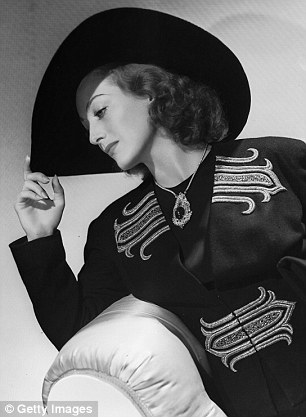
Hollywood glamour reached a new peak in the 1930's, with stars of the time like Joan Crawford donning bold, vibrant pieces. 

Highly polished golds were popular along with diamonds, rubies, sapphires and emerald cut stones. 

Three dimensional styles were also increasing in popularity and dress clips became 'sought after.'


1940's

Whether it was simple ribbons and bows or diamond encrusted statement pieces, women in the 1940's were all about elegance, glamour and, of course, diamonds. 

Marilyn Monroe's Diamonds Are A Girl's Best Friend inspired many women to spend big on the precious stone while others opted for brooches and wide, gold bracelets.

Earrings during this period were worn high on the lobe and gold was the metal of choice. 

Celebrities like Bette Davis were often seen high polished pieces and over sized dress clips.

1950's 

The 1950's were all about 'Ultra-Feminine' Glamour. 


Women and celebrities of the time, like Jayne Mansfield, enjoyed lavish styles that complemented a more 'simple and classic' fashion period. 

There was still an emphasis on diamonds however women also donned full ensemble pieces, dramatic and extravagant designs, light and textural looks that 'contrasted with the polished look of the 40s' and brooches. 

Platinum was often worn with diamonds and copper also started to become popular. 

1960's 


This was a time of practicality. 

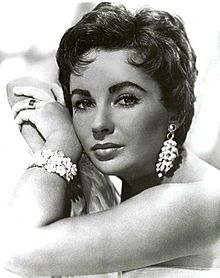
Female A-listers of this time, like Elizabeth Taylor, were into plastic jewelry, milk glass, bright colors, layered necklaces often made from beads and floral motifs. 

Other trends included princess cuts, non precious materials, cocktail rings, bohemian styles, handcrafted pieces and lightweight creations. 

Jackie Kennedy heavily influenced trends during this period. 


1970's 

Women in the 1970's loved to use jewelry to make bold statements and weren't worried about being too flamboyant or vibrant with their choices. 

Plastic was used regularly to create elaborate pieces and celebrities during this time, like Karen Valentine and Elizabeth Ashley would wear mixed materials, a lot of gold, beaded jewelry, large golden earrings and diamante jewelry. 

Colored quartz, coral and international styles inspired by cultural influences also became popular during this period. 

1980's


Everything in the 1980's was big. 

Women during this time were all about big hair, defiant 'punk rock styles' and mixing and matching their jewelry to make bold statements. 

Stars during this time, like Heather Locklear, would step out in faux pearls, over sized necklaces and earrings, brooches, gold and lighter cheaper materials.

Mixing and matching jewelry was a trend exemplified by Princess Diana who wore a choker as a headband. 


1990's


While this was known as a more 'fun and feisty' period, the punk rock choker styles reached a peak during this time. 

A-listers of the time, like Jennifer Aniston and Britney Spears would also arrive at awards shows in body jewelry, tasteful silver pieces, plastic creations and subdued colors inspired by alternative rock music. 

David Beckham also inspired men to embrace male jewelry like necklaces and engagement rings. 

2000's


Women in the 2000's enjoyed bold jewelry including large hoop earrings, layered chain necklaces, personalized jewelry and chokers, which remained popular. 

Celebrities during this time, like Megan Fox, would wear diamonds, rhinestones, cuffs, plastics and wood - many of them rocking a 'Boho-chic' look. 

Hip hop music heavily influenced jewelry trends and stars like Victoria Beckham and Liz Hurley showcased pieces inspired by Africa and the Middle East. 


2010's 


Current jewelry trends are diverse and nonrestrictive.

Celebrities are becoming increasingly innovative and experimental with their looks and often wear bold embellishments, platinum, colored gem stones and bright gem stones, such as surfer Vanina Walsh layering seaglass bracelets.
sources: The Daily Mail, Bella Beach Jewels


So come visit Handmade Jewelry Haven and become a trend setter in your own right with some of our Seaglass and Nautically designed jewelry!

Waves Necklace


I love to read comments so please, leave one here! To have your comment published, please leave your name so we know where to find you and read and comment on your blog too!
Jewel Blog Sig photo Jewel Sig_zpsoi88flxw.png

Follow my blog with Bloglovin

Tuesday, September 4, 2018

Need a gift for September? Learn about September's Birthstone here...


Although sapphire typically refers to the rich blue gemstone variety of the mineral corundum, this royal gem actually occurs in a rainbow of hues. Sapphires come in every color except red, which earn the classification of rubies instead.

The name “sapphire” comes from the Latin sapphirus and Greek sappheiros meaning “blue stone,” though those words may have originally referred to lapis lazuli. Some believe it originated from the Sanskrit word sanipriya which meant “dear to Saturn.”

Sapphires are found in India, Myanmar, Thailand, Vietnam, Sri Lanka, China, Australia, Brazil, Africa and North America (mainly Montana). Their origin can affect their value as much as color, cut, clarity and carat size.

Sapphires symbolize loyalty, nobility, sincerity and integrity. They are associated with focusing the mind, maintaining self-discipline and channeling higher powers.

September’s birthstone, the sapphire, has been popular since the Middle Ages. Back then, the celestial blue color of this gem symbolized heaven and attracted divine favor and wise judgment.

Greeks wore sapphire for guidance when seeking answers from the oracle. Buddhists believed it brought spiritual enlightenment, and Hindus used it during worship. Early Christian kings cherished sapphire’s powers of protection by using it in ecclesiastical rings.

Ancient Hebrews believed that the Ten Commandments were engraved on tablets of sapphire, though historians now believe the blue stone referenced in the Bible may have been lapis lazuli.

This gem became a symbol of royal love in 1981 when Britain’s Prince Charles gave Lady Diana a 12-carat blue sapphire engagement ring. Prince William later gave this ring to Catherine Middleton when he proposed in 2010.

Today, top-quality blue sapphire remains one of Mother Nature's rare gems.

Of course...if you prefer Seaglass to to Sapphires come see our Cobalt Blue Seaglass Necklace...a 'one of a kind' find indeed!

Cobalt Seaglass Necklace

Need a gift for a someone born in September? 

Click here to get your free September Gift Guide!

* indicates required

I love to read comments so please, leave one here! To have your comment published, please leave your name so we know where to find you and read and comment on your blog too!
Jewel Blog Sig photo Jewel Sig_zpsoi88flxw.png

Follow my blog with Bloglovin


Monday, July 23, 2018

Cobalt Sea Glass - Where does it come from?


One of my personal favorite colors of seaglass is dark blue, otherwise known as Cobalt or Cornflower Blue. There is something about that bright yet deep blue color that is just so....well...relaxing. 

Cobalt has been in use before Roman times with the discovery of the cobalt mines in Central Africa. Did you know that Minnesota has the biggest supply of Cobalt in the US?

Cobalt and Cornflower Blue are made by adding Cobalt Oxide to molten glass and was originally made to protect the contents of a bottle from the sun. Exposure to bright light or sun could change the effectiveness of a medicine that was in a bottle. Cornflower Blue was made primarily for Milk Of Magnesia bottles where cobalt was reserved for bottles that contained poison. As there were many types and brands of poison produced throughout history, the Cornflower Blue of the Milk Of Magnesia bottle became the harder to find of the two. Both colors rank as 'Rare' on the Seaglass Rarity Color Chart.
(source: Pure Sea Glass)

Who knows....maybe I find it so calming as that is the feeling you get after taking Milk Of Magnesia!

My Milk Of Magnesia Bottle probably dates anywhere from 1928 to the late 1930's due to the 'M' stamp (Maryland Glass Company), and the sideways number 8.
(source: Society For Historical Archaeology)

So after ceremoniously finishing a bottle of Milk Of Magnesia, the bottle is tossed into the nearest dump and some of this refuse is hauled out to sea and dumped, or perhaps it gets buried in a land fill that is next to the ocean and then it starts to erode into the sea with the coming and going of the tides - think Dead Horse Bay (see an earlier blog post on this place here). After about 20-50 years of tumbling around on the ocean floor it gets broken and sanded down and WHA LAH! Blue Seaglass is born! 

Then some very lucky person, such as myself, finds it along the Jersey Shore and makes a beautiful necklace for some lucky person to wear...such as yourself!

Blue Milk Of Magnesia Seaglass Necklace 
To see more beautiful Seaglass Jewelry, visit Handmade Jewelry Haven here!

To learn some more interesting history of the Milk Of Magnesia history and to see some beautiful examples of blue seaglass, I have a cool downloadable .pdf.
Just tell me where to send it!


Also, come watch our short video on Cobalt Seaglass here!

I love to read comments so please, leave one here! To have your comment published, please leave your name so we know where to find you and read and comment on your blog too!
Jewel Blog Sig photo Jewel Sig_zpsoi88flxw.png

Follow my blog with Bloglovin

Monday, July 16, 2018

Wordless Wednessday- Cobalt Seaglass


Just a little teaser for another great Seaglass post! 
Can you guess what it is going to be about?


Blue Seaglass Candy


Blue Seaglass Necklace
To see more of our nautically inspired jewelry, visit Handmade Jewelry Haven here!

I love to read comments so please, leave one here! I will visit your blog (if you have one) and love to comment too!
Jewel Blog Sig photo Jewel Sig_zpsoi88flxw.png

Follow my blog with Bloglovin

Sunday, June 10, 2018

Aqua Sea Glass - Where Does It Come From?


So I wanted to share with you a super cool find that we made while on our last seaglass trip back in March to the Jersey Shore.

We were wrapping up our beach foray for the day and my son looks over and finds what is left of a broken bottle. I was watching him from further down the beach as he tossed it down, and then seemed to reconsider and picked it back up and puts it in one of his cavernous pockets.

As you can see by the photo, you can clearly make out the 'S and possibly the letter before it is a 'R' or a 'B'. 

After doing some reading online and finding this really cool Historical Bottle Website, I found out that fonts that have those little 'appendages' on them are called 'Serif', the word being of uncertain origin, possibly from the Dutch word schreef meaning "line" or pen-stroke and were typical for bottles made between 1820 - 1910. 

Recently I had just gotten the 'Holy Grail' of Seaglassing books, 'Pure Seaglass', that was recommended to me almost unanimously from one of my seaglassing groups, and it had a wealth of information on bottles of that time frame, one being the medicinal bottle. 
I started searching for bottles that would end in a ---R'S and after some time, found AYER'S SARSAPARILLA. The picture matched my fragment! 
James Cook Ayer was a fascinating character! Born in 1818, his dad passed away when he was 7 and he was sent to live with his uncle and by 19 he was working in an apothecary (drug store). At 22 he went into business for himself making all types of concoctions that supposedly cured everything from the ague to baldness! He eventually wanted to follow in his uncles footsteps and go into politics, winning the nomination for the Republican seat for Congress, for Lowell Mass. He lost his bid however and the rejection was apparently too much for him to handle as his obituary stated that opposition to his candidacy was so strong he became unhinged. He was so violent he was confined to an insane asylum in New Jersey for months.
James Cook Ayer died at the age of 60 on July 3, 1878 in Winchendon, Mass.

The town of Ayer, Mass., was named after him.

So my bottle fragment is circa 1852 -1870 

So this was an excellent opportunity to show you how this: 


gets broken and tossed (or broken while being tossed) and looks like this: 


and finely after tossing around in the ocean for approximately 50 -100 years it can look like this: 


Then I find it and make it into something beautiful like this:


Light Blue Seaglass Necklace
Want to see something totally cool that I found too? I have a free download of the original 1860 NY Times Ayer's Sarsaparilla Ad!
Just tell me where to email it!


We thought that this was such a cool post that we made a short YouTube Video of it!
Come check it out here to hear my weird voice! 
Aqua Sea Glass Video

Want to see more pretty Seaglass Jewelry? Visit Handmade Jewelry Haven here!

I love to read comments so please, leave one here! To have your comment published, please leave your name so we know where to find you and read and comment on your blog too!
Jewel Blog Sig photo Jewel Sig_zpsoi88flxw.png

Follow my blog with Bloglovin